
Hilo Weather & Ocean Conditions
Check this before you book. Hilo sits on the windward side of the island. The trade winds and the open Pacific hit this coast first, so conditions change fast. The live wind map and 7 day forecast below are the same tools our crew checks every morning.
Every tour on our site has a rating. Match it to what you see here, be honest about your experience, and book at your level.
Live Wind Over Hilo
Wind is measured in knots. Under 10 knots is a calm day. Over 15 knots, the open coast gets choppy and boat tours get rougher.
Want to see the waves?
Open the full Windy map to check swell height and direction.
7 Day Forecast
Rain alone rarely cancels a tour in Hilo. Wind and swell do. Look at the wind row first.
Forecast courtesy of meteoblue
What Hilo Weather Is Really Like
Hilo is one of the rainiest cities in the United States, averaging around 125 inches a year. That rain is why the east side is so green, and why the waterfalls run. It is also warm. Most days land in the low 80s, nights in the upper 60s, all year.
Air
70s to low 80s °F
Warm year-round. Bring a light rain layer, not a heavy jacket.
Water
75 to 80 °F
A 3 mm wetsuit works all year for diving.
Rain
About 125 in. a year
Often passing showers, frequently overnight or in the afternoon.
How the seasons play out
- Winter (November to March): wetter, with bigger north and northeast swell. The Hāmākua Coast gets rough. This is also whale season.
- Summer (April to October): drier, with steadier trade winds and more calm windows. Usually our best diving.
- Time of day: mornings are usually calmest. Trade winds tend to build through the afternoon.
Elevation & Diving
You dive at sea level. Then you can drive to Colorado heights in an hour. Mauna Kea tops out at 13,803 feet and Mauna Loa at 13,679, about as high as the tallest peaks in Colorado. The difference is they rise straight out of the ocean. Measured from the sea floor, Mauna Kea is taller than Everest.
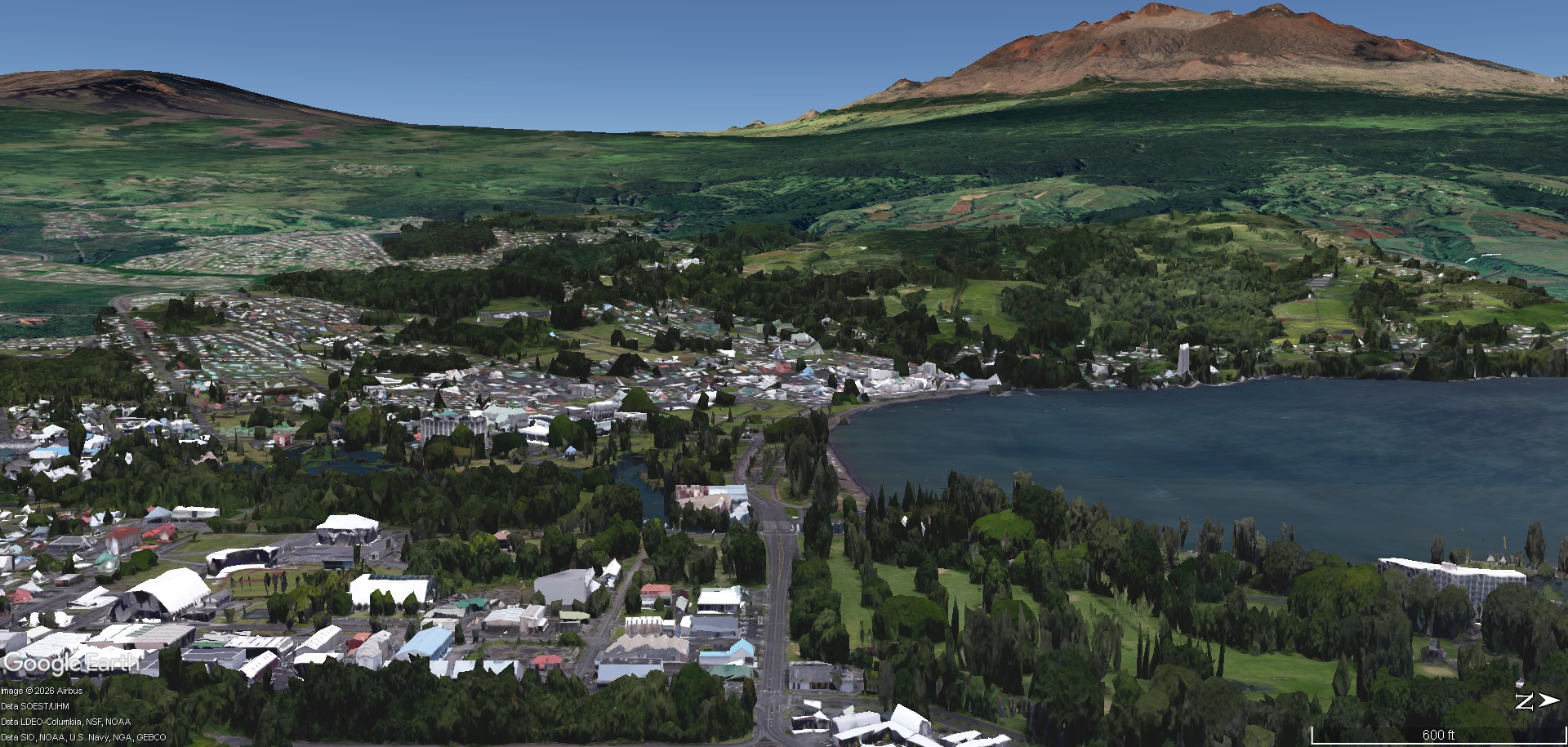
That matters after diving. Going up in elevation lowers the air pressure around you, which works like flying. If you go too high too soon after a dive, you raise your risk of decompression sickness.
Wait before you go up.
Following PADI guidelines, wait 12 hours after a single dive and 18 hours after multiple dives or multiple days of diving before flying or traveling above 1,800 ft.
Common drives that count
- Saddle Road to Kona or Waimea: climbs to about 6,600 ft between the mountains.
- Mauna Kea Visitor Center and summit: about 9,200 ft and 13,800 ft.
- Volcano and Hawaiʻi Volcanoes National Park: about 4,000 ft.
- Waimea: about 2,700 ft.
Driving to Kona the long way along the coast stays low. Plan your dive days first, then the mountain.
FAQs
Does it rain all the time in Hilo?
It rains often, but usually in passing showers, not all-day storms. Plenty of days are sunny between them. Bring a light rain layer and keep your plans.
Will rain cancel my tour?
Rarely. Rain is part of life here. Wind and swell are what cancel tours. Our crew makes the call each morning.
What is the best time of day to be on the water?
Mornings. Trade winds usually build through the afternoon, so early trips tend to be calmer.
What is the best season for diving?
Summer usually brings the most calm days. Winter brings bigger swell, but also whales, and we still dive on the good days.
Can I dive and then visit the volcano the same day?
No. Volcano sits around 4,000 ft. Wait 12 hours after one dive and 18 hours after multiple dives. Do the volcano first, or the day after.